Select another country or region to see products specific to your location.
Türkiye
Choosing the right pleated blinds for your glass balcony is crucial for both aesthetics and long-term comfort. Many people overlook important details during the purchasing process, leading to later regrets.
This article will detail the common mistakes and correct practices when choosing curtains for glass balconies.
One of the most common and costly mistakes made when buying pleated blinds for glass balconies is taking incorrect measurements. Many people take simple measurements, thinking of it as a standard window, but glass balcony systems require much more precise measurements.
Each glass balcony system has different structural characteristics. Measurement techniques vary for folding systems, sliding systems, or fixed panels. Many customers order by measuring the total width of the glass surface, but profile thicknesses, seal widths, and gaps between panels are not taken into account. This leads to problems such as the curtain contacting the glass during installation or the rails not opening.
Choosing the right mounting method is just as important as choosing the right fabric. For single-glazed balcony installations, all mounting options are suitable. However, for double-glazed balcony systems, hook-mounted or adhesive-mounted pleated blinds should be chosen. We have thin pleated blind profiles specifically designed for double-glazed balcony blinds.
The Right Approach: Professional assistance should be sought for pleated blind measurements. Not only the visible width of the surface to be installed, but also the profile depth, glass thickness, and opening direction should be considered.
Ideally, the manufacturer or authorized dealer should take on-site measurements. If you are taking measurements yourself, you must work with millimeter precision and take separate notes for each panel.
It is a major mistake to assume that every panel in a glass balcony is the same size. Especially in older buildings or later additions, there can be millimeter differences between the panels. Ordering with a single measurement for the entire balcony can result in some panels being left without curtains or the curtains overlapping.
The Correct Approach: Each glass panel should be measured and numbered separately. Particular attention should be paid to corner panels and fixed panels. During measurement, the opening direction of the panel, its distance from the adjacent panel, and the top and bottom profile clearances must be recorded. This detailed approach ensures a perfect fit.
Choosing pleated curtain fabric is not just an aesthetic preference, but also a technical decision that directly affects your intended use. Many people choose based solely on color and pattern, only to encounter functional problems later.
Glass balconies generally receive intense sunlight. How much sunlight the fabric lets through or blocks will determine whether your balcony becomes a comfortable usable space. While transparent or slightly permeable fabrics may look aesthetically pleasing, your balcony can become unusable when the afternoon sun hits it directly. You will experience overheating and sun-induced discomfort.
The Right Approach: Consider which direction your balcony faces. For south and west-facing balconies, fabrics with a higher sun protection factor should be preferred. For north-facing balconies, models with high light transmittance provide greater comfort.
When choosing fabric, be sure to check the manufacturer's information on the sun protection percentage. Dual-system models, semi-transparent for daytime use and blackout for evening privacy, offer an ideal solution.
You can view pleated blind glass balcony models and prices in detail in our category.
Many people buy curtains solely for visual privacy, neglecting their thermal insulation and light control properties. Glass balconies, which can become excessively hot in summer or leak cold air in winter, can be significantly made more comfortable with the right fabric choice. Standard single-layer fabrics are insufficient in this regard.
The Right Approach: Honeycomb fabrics provide thermal insulation thanks to the air gaps between the layers. They retain warmth inside in winter and reduce the entry of outside heat in summer. Reflective fabrics prevent heat buildup by reflecting sunlight. If you plan to use your balcony actively all year round, fabrics with heat-controlling properties should be preferred. Metallic coated or multi-layered structures provide energy savings.
Note: Honeycomb blinds and dual day/night systems are not suitable for double-glazed balcony systems.
Not every pleated blind model is compatible with every glass balcony system. System incompatibility can both hinder the blind's function and damage the glass balcony mechanism.
Folding glass balcony systems require the panels to fold inwards or outwards. Fixed-mount or wide-profile pleated blinds can prevent the panels from folding. Models with particularly thick profiles can cause the panels to jam together when folded, damaging both the blind and the glass system. Users who make the wrong choice may either have to keep their blinds open constantly or be unable to use the glass at all.
The Right Approach: For folding systems, choose pleated models with a slim profile and flexible mounting options, specifically designed for this purpose. Using a separate blind per panel allows each panel to move independently. Before installation, be sure that the panels can be fully opened and closed once the blind is installed. Some manufacturers offer solutions specifically designed for folding systems; research these options.
Glass balcony rails are critical for the smooth movement of the panels. Damaging the rail system or hindering the rails' function is a common problem during pleated blind installation. Problems such as rail damage, punctured seals, or malfunction of the panel mechanism can occur when using screw mounting.
Correct Approach: Before installation, be sure to check the technical specifications of your glass balcony system. Adhesive or clip-on systems may be safer than screw-on installations. When determining installation points, the rail mechanism, locking system, and seals should not be overlooked. To avoid voiding the warranty, follow the installation method recommended by the manufacturer. Obtaining approval from the glass balcony company for installation is the safest approach.
When opting for lower-priced products, mechanism quality is often overlooked. However, the most challenging part of daily use is the curtain's opening and closing mechanism.
Many inexpensive pleated blind options are available on the market, but most use low-quality cords and profiles. The cords wear out, lose tension, or break over time. The thin aluminum profiles deform, and the blinds don't function properly. These problems become apparent within the first few months, especially in heavily used glass balconies. Ultimately, this leads to the need for new blinds, increasing the total cost.
Correct Approach: The quality of the cord should be checked; preferably, models with steel-reinforced or special polyester cords should be chosen. The thickness of the aluminum profiles should be at least 0.8 mm. Check whether the mechanism parts are metal; plastic parts will break over time. The warranty period provided by the manufacturer for the mechanism is an indicator of quality. Products with at least a 2-year warranty on the mechanism should be preferred.
A curtain that is used several times a day will become annoying over time if it creaks or moves with difficulty. Poor bearing systems or friction-generating mechanisms negatively affect user comfort. Noise problems are particularly problematic when used early in the morning or at night.
The Right Approach: Always test the blind before purchasing. Open and close it a few times to check the smoothness and noise level of the mechanism. Pay attention to whether the braking system operates smoothly. Observe whether the blind gets stuck at any point. Blinds that close on their own or cannot be fixed in place have a mechanism problem. A product that operates quietly in the store will perform just as well on your own balcony.
Even the highest quality product can become unusable with incorrect assembly. Many people try to assemble it themselves to cut costs, but inexperience leads to serious problems.
Although pleated blind installation may seem simple, it requires professional knowledge in glass balcony systems. Inserting screws in the wrong places can cause the glass to crack or the sealing system to malfunction. An angled installation prevents the blind from opening and closing properly. Combined with measurement errors, this can lead to complete installation failure and render the product unusable.
The Right Approach: Whenever possible, use a professional installation service. Experienced installers know the specifics of glass balcony systems and will apply the appropriate installation method. If you want to do it yourself, be sure to review the detailed installation instructions and obtain the necessary tools. Use a spirit level to ensure a straight installation. Recheck all measurements before inserting the first screw. Ask the company for support if you have any doubts.
Glass balcony systems usually come with a long-term warranty. However, unauthorized tampering or faulty installation may invalidate this warranty. Drilling into the profiles, removing seals, or applying adhesive to the glass are not covered by the warranty. The glass balcony company may not accept responsibility if you experience problems.
The Right Approach: Contact your glass balcony company before installation and obtain their approval. Find out which installation method will not affect the warranty. If possible, shop from curtain companies recommended by or affiliated with the glass balcony company. Document and photograph all installation processes. Keep your warranty documents. It must be clearly determined which company is responsible in case of any problems.
At Fullplice, we offer our customers a 2-year warranty.
- Take separate and precise measurements for each wing; seek professional help.
- Choose the type of fabric according to the orientation of your balcony and how much sunlight it receives.
- If you have a folding system, choose compatible slim-profile models.
- Check the quality of the mechanism; prioritize models with thick profiles and steel cables.
- Learn about methods to protect your glass balcony warranty before installation.
- Choose based on quality and compatibility, not price.
- Evaluate the warranty period provided by the manufacturer.
- When choosing pleated blinds for double-glazed balcony windows, please select either the hook system or adhesive mounting option and specify this in the comments.
- Know the type and brand of your glass balcony system.
- Always test fabric samples in daylight on your own balcony.
- After assembly, ensure the wings open and close freely.
- Choose fabric properties suitable for your climate conditions.
- Choose models that are easy to clean and simple to maintain.
- Consider fade resistance when choosing a color.
- Investigate after-sales support and spare parts availability.
- Read user reviews to learn about product performance.
For more information, contact Fullplice and ask any questions you may have.
Whatsapp: +90 532 499 65 40
Email: info@fullplise.com
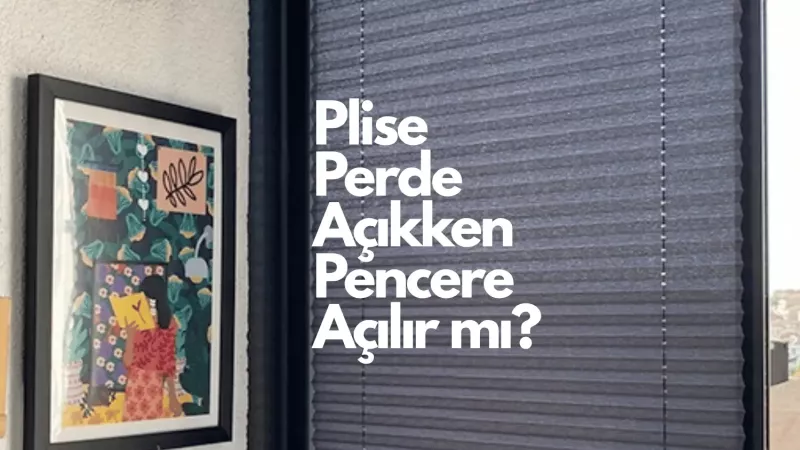
Plise perde satın almayı düşünen kullanıcıların en çok merak ettiği konulardan biri, “Plise perde açıkken pencere açılır mı?” sorusudur. Özellikle PVC pencere, açılır kanat, vas...

Bir çocuk odasında perde seçimi, çoğu ebeveynin listesinde renk ve karakter desenlerinden sonra gelir. Oysa iş güvenliğe, uyku düzenine ve hijyene geldiğinde perde, odanın en ço...

Güneşlik seçimi çoğu zaman tamamen pratik bir karar gibi görünür: güneşi engelleyecek, ısıyı tutacak, mahremiyet sağlayacak. Peki ya bunları yaparken odanın atmosferini bozmamas...

Güneşi engellemek için cama en etkili ve pratik çözüm, güneş kontrol özellikli plise perde uygulamaktır. Plise perdeler, özellikle honeycomb ve blackout modelleriyle güneş ışınl...